
 By Tommy Lee

A few things I have learned about running a good Q&A from listening to a Hall of Fame broadcaster for over twenty years.
I have done a lot of interviews and panels over the years. On our Resource Global podcast, UpNext, I get to sit with Christian marketplace leaders around the world and ask them about their lives, their work, and their faith. I do it in donor meetings. I do it on panels, where my goal is to make sure it turns into an engaging conversation. I learned how to do a lot of this by listening to ESPN sports radio. Sports radio, especially certain personalities NOT named Stephen A. Smith or Pat McAfee, has taught me over the years how to ask interesting and probing questions.
Over the years I picked up a lot of my interview skills by listening to Mike and Mike and to Dan Patrick. Dan is a Hall of Famer and hosts The Dan Patrick Show. Here is what I have learned from Dan over the years:
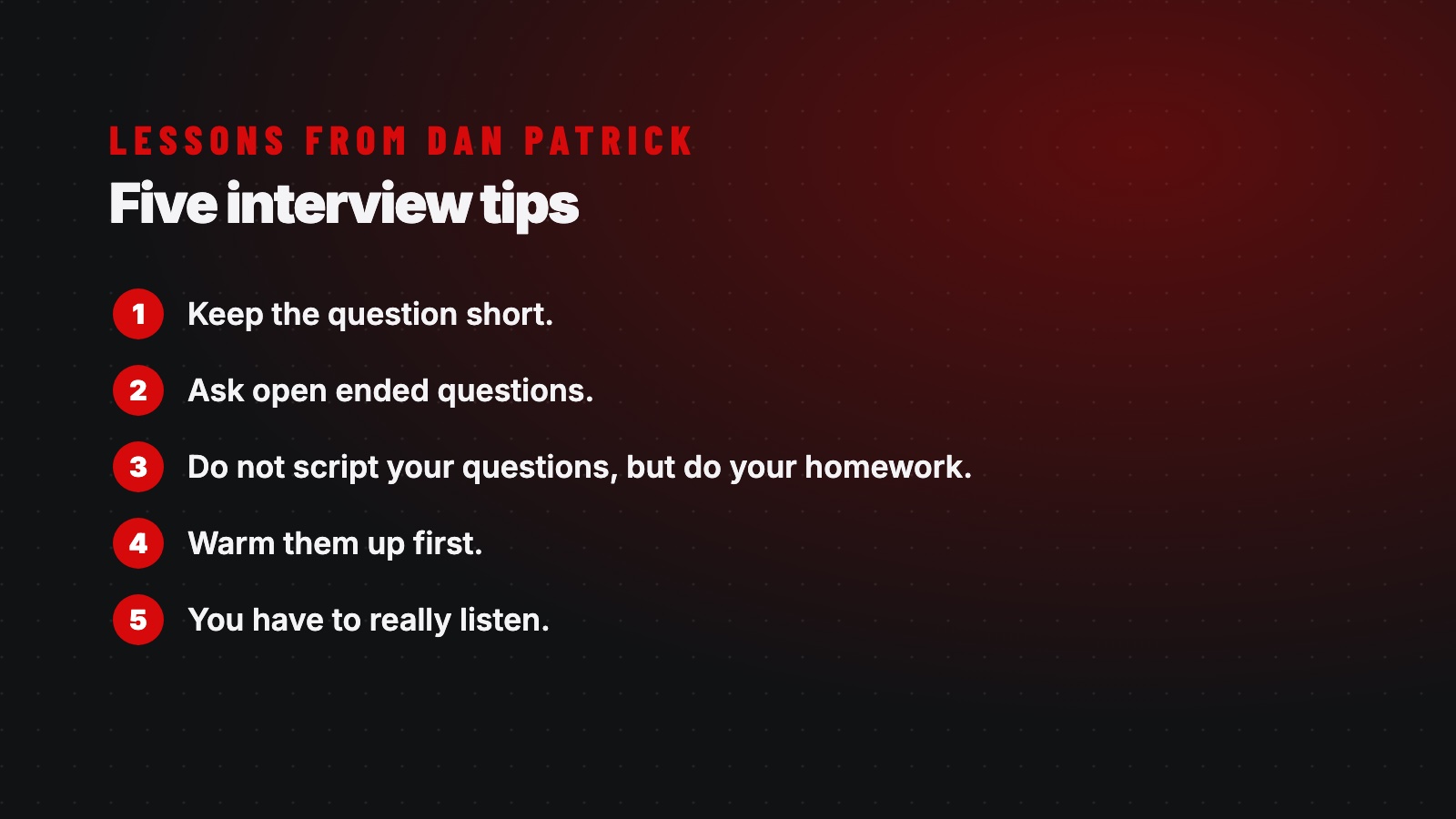
1. Keep the question short.
Shorter questions get better answers. Fight the urge to keep talking. Dan even has a name for what goes wrong. He calls it the ask, answer, ask trap. You ask a question, then you nervously answer it yourself, then you ask another one, and the person across from you never gets to speak. Your job is to get them to open up and share what they are thinking and what they have experienced. Do not make yourself the star of the show. I am not saying never share your thoughts. Just do not make it about you. Make it about the person you are interviewing.
2. Ask open ended questions and not yes or no questions.
Do not ask, did you think about leaving? Ask, how close did you come to leaving? One gets you a yes. The other gets you a story. Here is another one. Instead of, “did you like living in that city,” ask, “what was it about that city that made it so hard, or so good to live in? How did that time change you?” And when you can, ask them to take you back to the moment instead of just summing it up. People do not give you the real story in a summary. It comes out when they are back in the moment.
3. Do not script your questions but do your homework.
Dan says he researches the person carefully, but he does not write his questions down. He holds a few topics in his head, and then he listens and follows where the person actually goes. This one is huge, and it takes more preparation, not less. You have to really know the person going in. Then, during the interview, you listen closely, watch where their answers are heading, and build on that. That is what lets you relax and stay in the moment.
4. Warm them up first, and save the hard question for later.
Do not open with the tough one. Larry King used to start with simple, easy questions just to get people comfortable. Terry Gross lines up her questions so the guest opens up slowly. When she interviewed Andre Agassi about his drug use, she waited more than twenty minutes to get there. I try to do the same thing in my interviews. Spend the first few minutes building a little trust and letting them settle in, and then go to the harder, deeper questions once they feel safe with you. Develop a rhythm.
5. You have to really listen.
Let me build on what I had written in #3. Dan says if you listen, you will be a better communicator, a better salesperson, and a better interviewer. And he says something I think is key. It is amazing what people will say, even when they are not trying to say anything. The good stuff almost never comes from my clever question. It comes three sentences into their answer, once they have relaxed and forgotten the microphone is there. That is why the follow up matters more than the first question. When you hear something real, do not move on to your next topic. Stop and talk about it a bit.
And do not forget to ask why. It sounds obvious, but it is key. When someone tells me what they did, the key is understanding why they responded in the way they did. What was their thinking behind it?
Ask about the feeling, not just the facts. It is easy to ask what happened. The better question is what it felt like. Or you just say, that must have been really hard, and let them go there. The events are only half of it. How they felt is where the real story is. And when I ask how something actually hit them, it tells the person I care about more than just the facts. It allows me to go deeper in the conversation.
And do not be afraid of a little silence. When someone gives a short answer and it goes quiet, every instinct says jump in and fill it. Do not. Let it sit for a bit. Most of the time they keep going, and the thing they add after the pause is the honest one because they are getting more comfortable and more relaxed.
Lastly, end with a good closing question. A lot of the best material shows up right at the end, so I do not just trail off. Two questions almost always work. One is, is there anything I did not ask that you wish I had? The other is, what do you want people to take away? You give them the last word, and they often say the truest thing of the whole conversation right there.
Great interviews are the ones where you remember the answers, not the questions. Nobody has ever walked away saying, wow, what a great question that was. They remember feeling heard. And that, to me, is a win in the conversation.
Fight the temptation to talk and express your thoughts. Add in when it’s needed, but your job is to ask interesting questions, keep the energy level up, and stay out of their way. And give them the opportunity to share their story.