
 By Tommy Lee
The practical habits that changed how I lead, and how we work in every city.
In Part 1 we talked about how some leaders just love to give answers. Instead of listening, they are always so fast in trying to give you the answer to your problem.
Michael Bungay Stanier, who wrote The Advice Trap, has a good way of putting it. He calls that urge inside us the advice monster. And his honest point is that you never fully get rid of it. The goal is not to kill the urge to give advice. It is to tame it. His whole book really boils down to one idea. Stay curious a little bit longer, and rush to advice a little bit more slowly. That is basically the title of this article. So here are the ways I try to do that. Love to hear your thoughts on this.
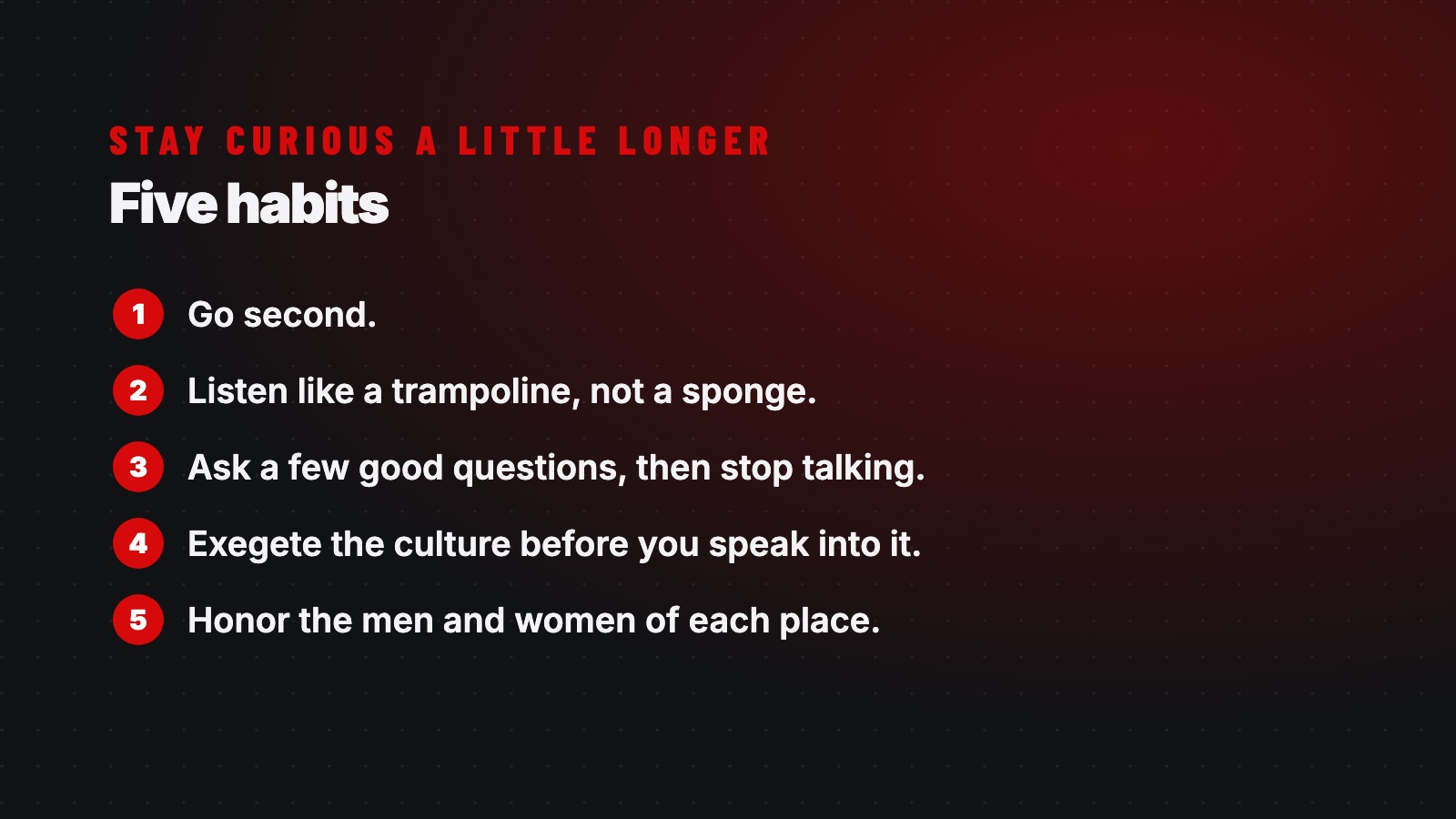
- Go second. Ask a few more questions before you give advice. Fight the temptation to give answers right away. You still get to share what you know. You just go second, after you have actually listened. When I give advice after really listening, it tends to land. You do not need to try and be the smartest voice in the room.
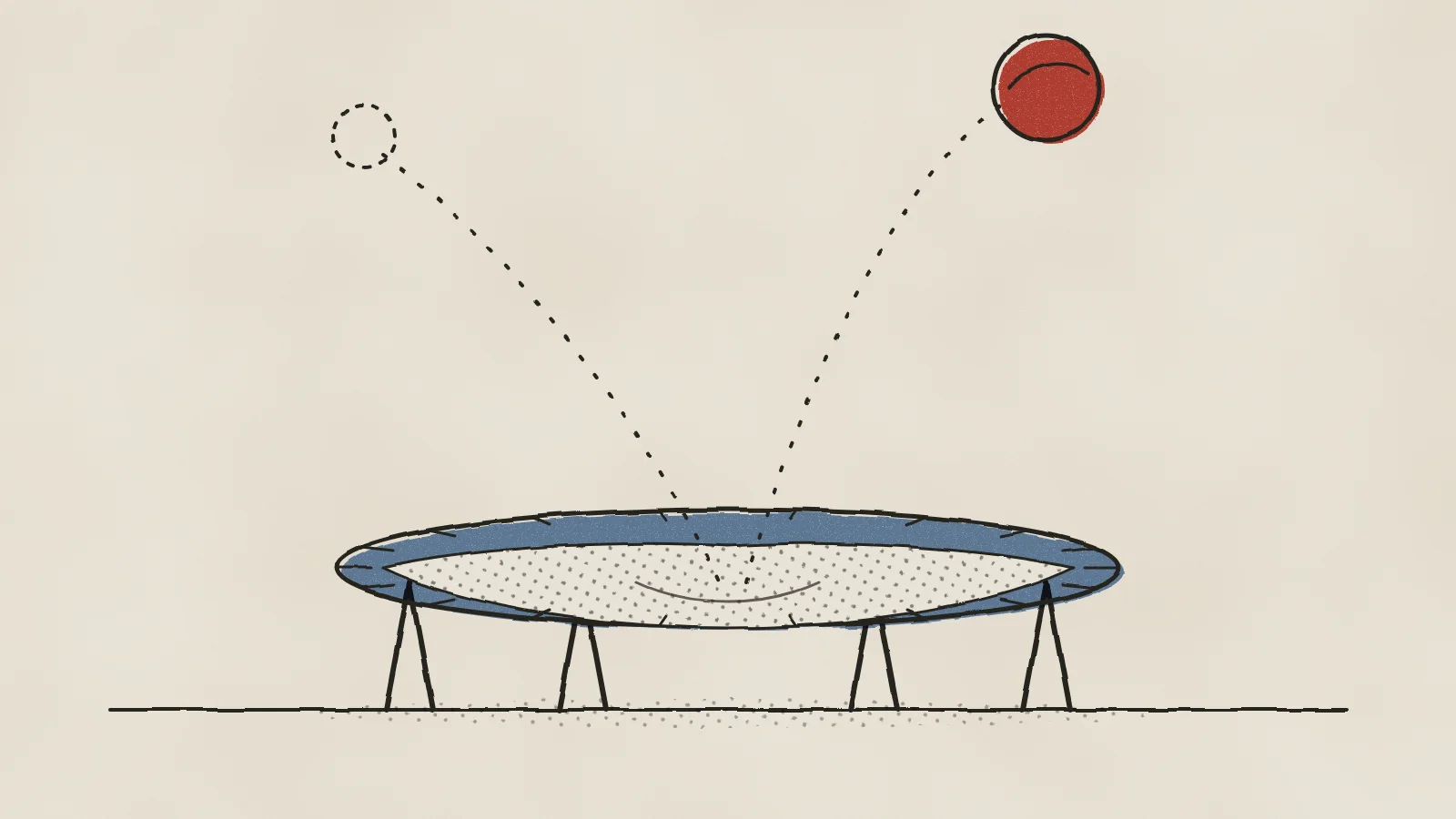
- Listen like a trampoline, not a sponge. There is good research on this. Harvard Business Review looked at the best listeners and found that great listening is not sitting there quietly soaking it all up like a sponge. The best listeners are more like a trampoline. They ask questions, they give energy back, they help the other person think out loud and actually get somewhere. And two Harvard researchers, Brooks and John, found that people who ask more questions, especially follow up questions, are better liked and learn more. So good listening is not going quiet. It is staying quiet enough to hear them, and then asking.
- Ask a few good questions, then stop talking. I do not have a long list. A few questions do most of the work. The best one I took from Michael’s earlier book, The Coaching Habit. After someone tells you what they think the problem is, do not jump in with a plan. Just ask, “And what else?” Then wait. He calls it the AWE question, and AWE stands for And What Else. His point is simple. The first answer a person gives is almost never their best one. There is usually more sitting right behind it. So you ask it a couple of times, and the real thing often comes out on the third try. Two others I lean on. “Why do you feel this way?” to start, and “Why do you think this is happening?” That last one keeps me from solving the wrong problem.
- Exegete the culture before you speak into it. In ministry we talk about exegeting a passage, which just means you study it carefully before you teach it. You can do the same thing with a city. Study it. Read it. What do the people here love, fear, and celebrate? What is already good here that God put in place? You are never walking into an empty room. God got to Jakarta and Cairo before we did. Paul did this in Athens. Before he preached, he walked around, looked at what they worshiped, and even quoted their own poets back to them. He read the city first. He exegeted the culture that he was in.
- Honor the men and women of each place. The local leaders are not a problem to fix. They are the ones who actually know the cultural context on the ground, and they are the ones God will use long after I am gone. So we treat them as leaders to learn from, not projects to manage.
Going second is slower. It can feel like losing. Someone with money and answers can walk in and get a result this quarter by just telling everyone what to do. Listening first means you might fund something you did not design, led by someone who does it differently than you would. You might see something different, or it may change your initial assumption. But it’s far more effective and produces lasting change. The key here. LET GO OF CONTROL.
There is also something about power going on underneath all of this. When someone with money and a platform gives advice fast, the room goes quiet. Not because the outsider is right. Because the outsider is the one holding the money and funding. They hold the power. But what does it mean to give power away and create ownership? A good question hands the power back to the person who actually lives there. It shows that you value their opinion and voice.
I can stop needing to be the expert, because Jesus already is. My worth was never riding on having the answer. That is what frees me to put my own ideas down for a minute and really hear a person. James says to be quick to listen and slow to speak. Always always honor the people and listen. It is far more effective than being the first one to talk.