
Every company says they care about customer service. Very few actually deliver it. Think about the last time you called your cable company or sat in a drive thru line at a lot of McDonald’s or Popeyes. Did anyone seem glad you were there, or did you get an attitude? Did you get your order completely wrong?
I’ve been to both Disney and Chick-fil-A, and every time I notice the same things in both of these places. Both places are always so clean. The employees are warm and engaging. And their service and attention to detail are so meticulous.
Disney (Disneyland in California and Disney World in Florida) and Chick-fil-A are also two companies people go out of their way to talk about. Their service shows up in how often people come back and in how much money they make.
So I dug into what Harvard Business Review and Fast Company have written about both companies, and into the numbers behind them.
Disney
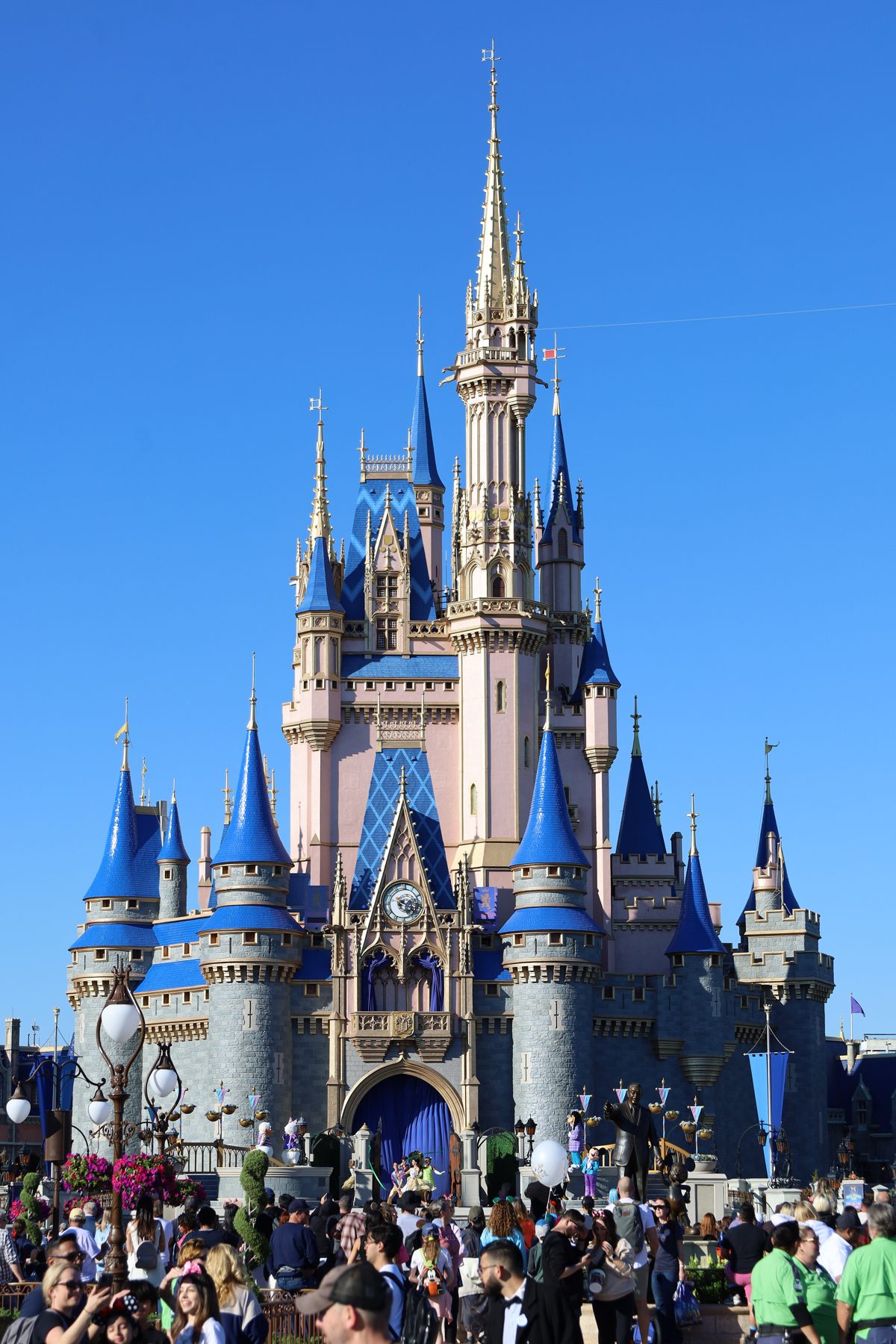

Everyone trains the same way
At Disney, employees are called cast members. Every new cast member, whether it’s a new vice president or someone in housekeeping, full time or part time, starts with the same class called Disney Traditions. They learn the history of the company, the culture, and what is expected of them.
They also learn what Disney calls the Five Keys: Safety, Courtesy, Inclusion, Show, and Efficiency. Safety always comes first. When Disney had only four keys, Efficiency was listed last, after Safety, Courtesy, and Show. They would rather a cast member take an extra minute with a guest than rush them along.
- 1Safety
- 2Courtesy
- 3Inclusion
- 4Show
- 5Efficiency
Clean, down to the trash cans
You can see it in how clean the parks are. The story goes that Walt Disney watched how far people would carry their trash before dropping it on the ground. It was about 30 steps. So at Disney you see a trash can almost everywhere you look.
Jody Jean Dreyer worked at Disney for 30 years and held 22 different jobs there, from parade dancer and park cashier all the way up to senior vice president. She told Fast Company that Disney is almost “maniacal” about getting things right. When she described the Disney way, she put it simply: “It’s people, it’s story, and it’s attention to detail.”
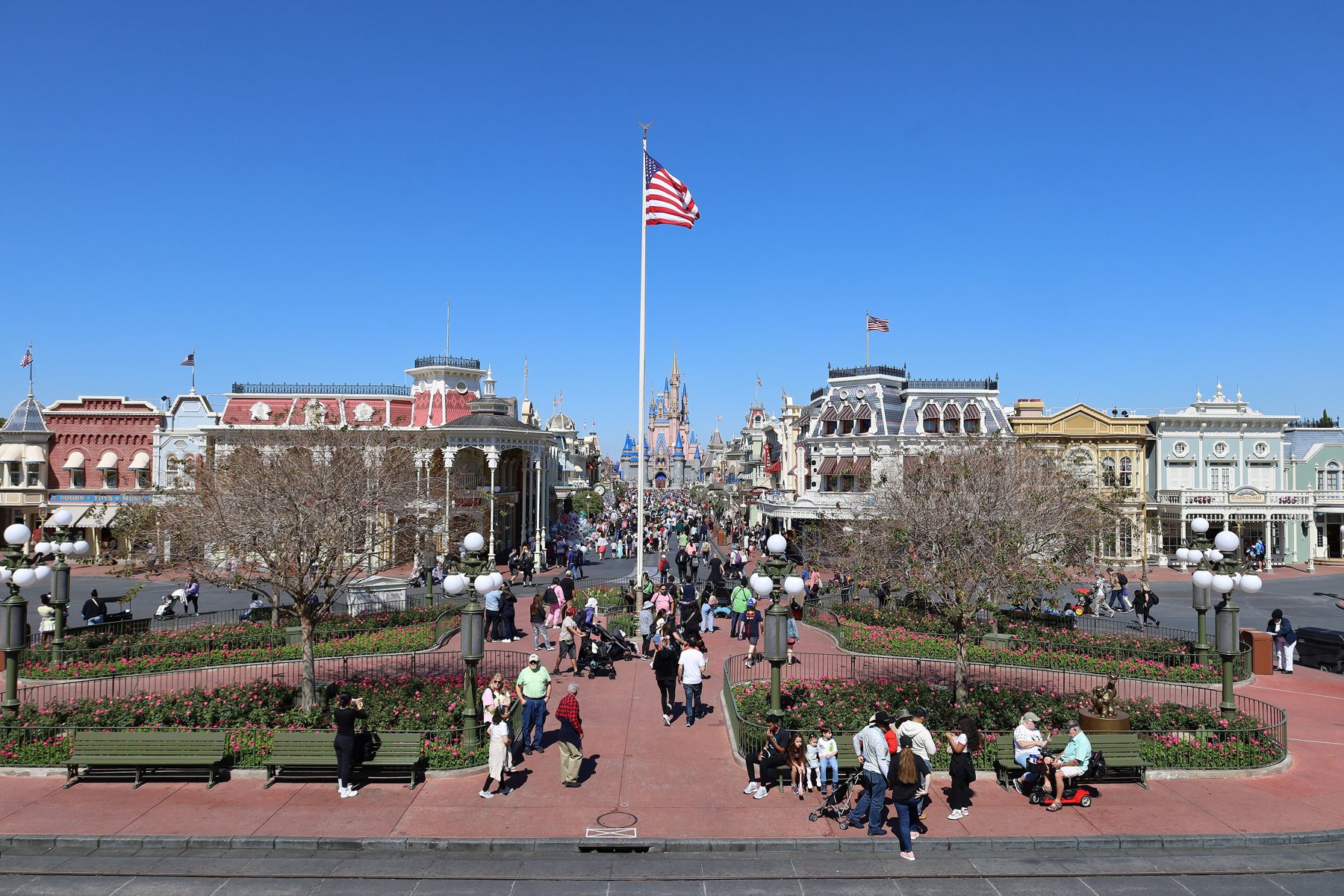
Even the shops are planned. Jon Cook, who worked at Magic Kingdom during college, wrote in Fast Company that when you walk down Main Street in the morning, the stores have things like sunscreen and snacks. On the way out at night, the stores with clothes and souvenirs are right there for one last stop. Most guests never notice it, but it makes the day easier.

Answer the real question
The Disney Institute, which trains other companies in the Disney way, uses a well known example. Cast members at Magic Kingdom hear this question all the time: “What time is the 3 o’clock parade?” It sounds like a silly question. But a cast member is trained not to just say “3 o’clock.” The guest really wants to know where to stand and when the parade will get to them. So a good answer sounds like this: it starts at 3:00 in Frontierland, it gets to Main Street around 3:20, and here is a good spot in the shade to watch it.
Jon Cook said they were taught to go even further. Tell the guest the parade starts at 3, that getting a spot around 2:40 gives you a better view, and offer to show them a less crowded area. If rain was coming, they might even hand out ponchos.
They are trained to listen for what the guest actually needs, and then answer that.
Every cast member can make someone’s day
Disney calls the little extras “pixie dust” moments. According to Fast Company, every cast member has the freedom to do something small to make a guest’s day better. A food worker might tell a family their Dole Whip or churro is “on Mickey,” which means it’s free. A ride operator might ask a kid if they had fun, and if they did, let them ride again without waiting in line. And if a cast member can’t fix a problem, they’re trained to get it to someone who can.
A teenager running a ride has permission to make a decision for the guest. How many companies trust their front line people like that?
It’s the people
Jason Kirk oversees all four Disney World theme parks in Orlando. He told Fast Company that guests love the fireworks and Space Mountain, but “those moments with the cast are the things that create lifetime memories.” And it isn’t only the people inside the parks. Kirk said the bus drivers get the highest ratings of any cast members. The hotel housekeepers do what Disney calls hallway hospitality: a smile, a hello, and helping you with whatever you need.
A Disney executive told Smart Meetings that when you ask guests why they came back, it’s “almost never about a ride or an attraction.” It’s about the people they met and the quality of the experience.
Chick-fil-A

It started in a hard year
In 1982 Chick-fil-A had the only sales decline in its history. The economy was in a recession, and Truett Cathy called it the most severe year ever for the company. Instead of putting together a turnaround plan, his leadership team prayed and thought about why the company existed in the first place. That’s where their mission statement came from, and it’s still the same today: “To glorify God by being a faithful steward of all that is entrusted to us. To have a positive influence on all who come in contact with Chick-fil-A.”
That second sentence is where all of the service comes from.
“My pleasure”
The story goes that Truett Cathy was staying at a Ritz-Carlton in New York. He thanked a staff member, and instead of “you’re welcome,” the person said “my pleasure.” He brought that back to Chick-fil-A, and in 2003 his son Dan Cathy made it the standard for every restaurant.
It’s two words, but it changes how the whole exchange feels. You feel like they were actually happy to help you.
Around the time of the Great Recession, Chick-fil-A went further. They brought in Horst Schulze, who cofounded Ritz-Carlton hotels, and Danny Meyer, the restaurant owner who started Shake Shack, to help them improve their service. Fast Company reported that they changed how team members talk to customers. “Uh huh” and “No problem” were replaced with things like “My pleasure” and “May I refresh your beverage?” Some restaurants walk customers to their cars with umbrellas when it rains and put fresh flowers on the tables.

The second mile
Dan Cathy also pushed something called second mile service. It comes from Matthew 5:41, where Jesus says if someone forces you to go one mile, go with them two. In Jesus’ day a Roman soldier could make you carry his gear for a mile. Going a second mile was a choice nobody expected you to make.
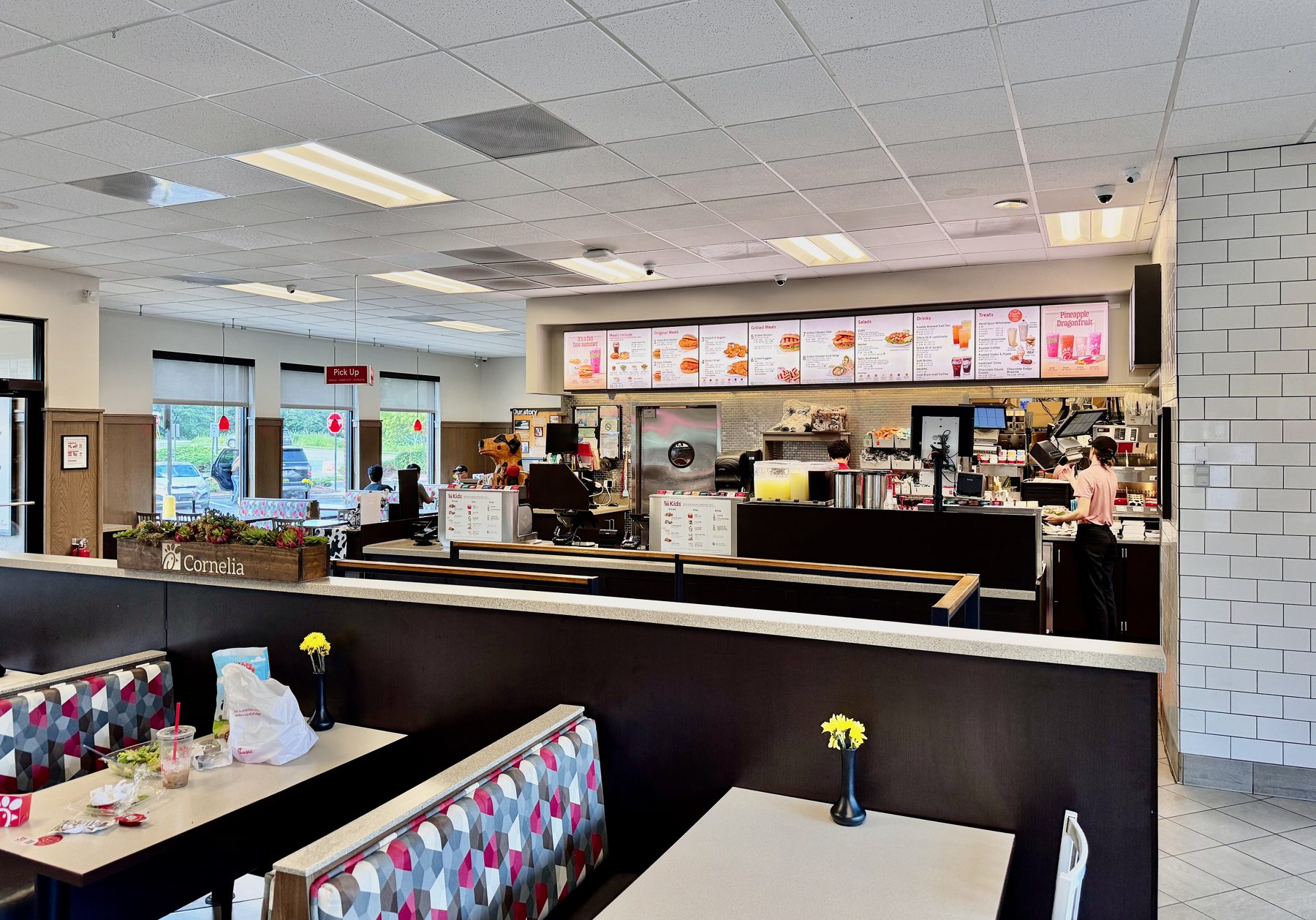
At Chick-fil-A, the first mile is what the customer expects: the right order, hot food, and a clean restaurant. The second mile is something extra they didn’t expect, like bringing the food out to your table or coming around to refill your drink.
Fred Reichheld, the man who created the Net Promoter Score, wrote in Harvard Business Review about a friend in Dallas who loves his local Chick-fil-A. An employee named Jose asked the friend’s three year old to help him mop, and then gave the little boy a ride around the restaurant on the mop. That’s the kind of thing a family tells everyone about.
The leaders serve first
In 2004, Fast Company followed Dan Cathy, who was president of Chick-fil-A at the time, to a grand opening in Evansville, Indiana. Instead of heading to the airport, he went straight to the customers camping out in lawn chairs and sleeping bags for the opening and introduced himself to them one by one: “I’m Dan. I work in customer service.”
Back then, every one of Chick-fil-A’s corporate employees, Dan included, spent one day a year working behind the counter. New operators came to his house for dinner, and he cooked, served the food, and cleared the dishes himself. At some restaurants, the first employee to memorize 100 customers’ names got $100. And if someone called to say they had picked up the wrong food, Chick-fil-A would often bring the right order to them.
Fast, but still personal
Chick-fil-A drive thru lines are known for wrapping around the building. Some restaurants can move upward of 500 cars an hour. In Atlanta they built a four lane drive thru with an elevated kitchen, where the food comes down a conveyor to team members on the ground, and the company says that design can serve 720 cars an hour.
But even with all of that, David Farmer, who leads innovation at Chick-fil-A, told Fast Company that the technology has to “help them be the hero” and free up team members to connect with the guest. The order still ends face to face.
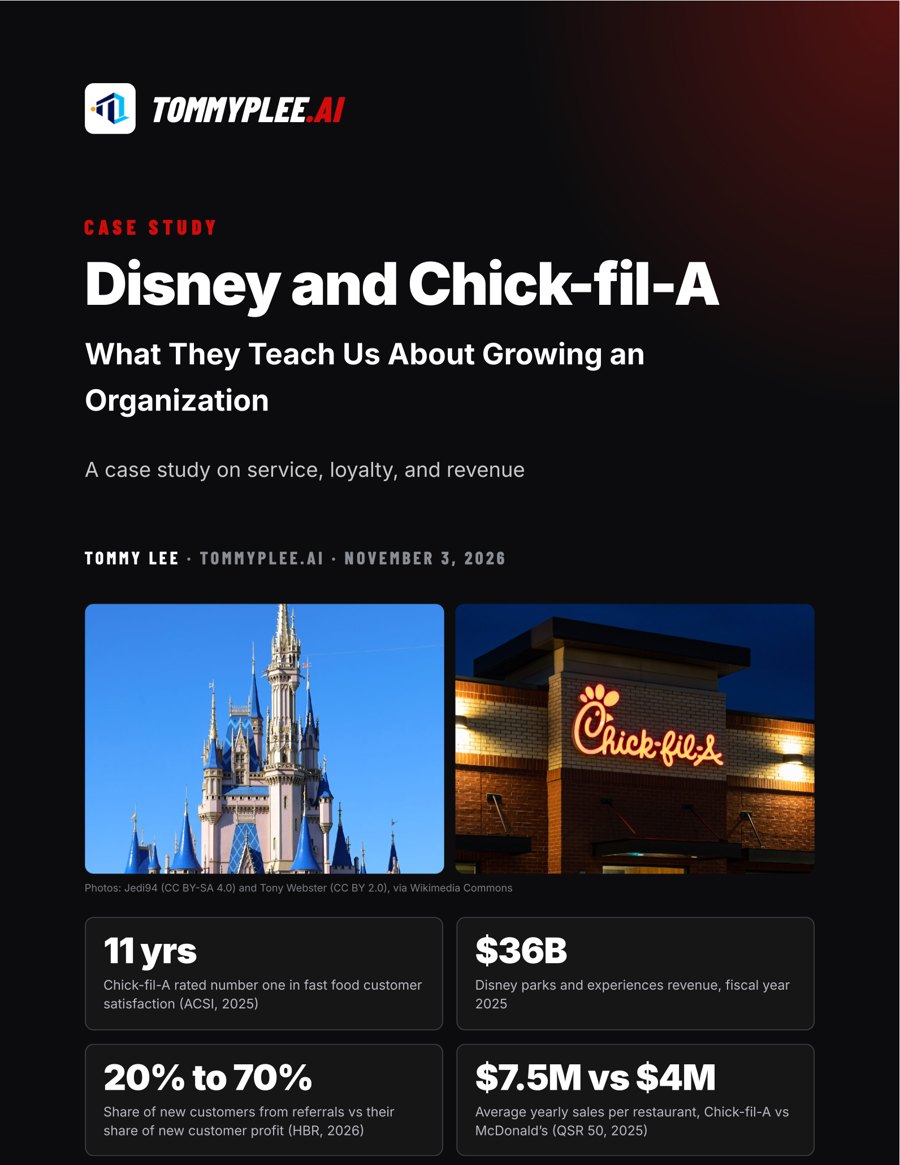
For 11 straight years, Chick-fil-A has been rated number one in customer satisfaction among fast food restaurants by the American Customer Satisfaction Index. In the 2025 study it scored 83. McDonald’s came in last at 70. The index looks at things like how courteous the staff is, the quality of the food, and how clean the restaurant is.
How service turns into loyalty and revenue
Good service is nice, but does it actually make money? Yes. Frederick Reichheld of Bain & Company, writing with Earl Sasser in Harvard Business Review, found that keeping just 5% more of your customers can raise profits anywhere from 25% to 95%. Loyal customers spend more over time. They also tell their friends, which is free marketing.
Reichheld wrote another article in Harvard Business Review this fall with Jamie Cleghorn and Wojtek Kokoszka. They looked at data on more than 10 million people. On average, only about 20% of new customers came from a referral, but those customers brought in more than 70% of all the profit from new customers. Referred customers cost less to get, they stay longer, and they buy more.
They named Chick-fil-A as one of their examples. Chick-fil-A grew to almost $23 billion in sales and built more than 3,000 restaurants without ever selling stock to raise money. When your customers do your marketing for you, you don’t have to spend nearly as much to get new ones.
The growth is hard to ignore. Fast Company reported that Chick-fil-A’s sales grew 88% in just five years, to nearly $19 billion in 2022. In 2024 they did about $22.7 billion in US sales. That makes it the third largest restaurant chain in the country, behind only McDonald’s and Starbucks. And it is closed every Sunday.
The average Chick-fil-A brings in about $7.5 million a year. The average McDonald’s brings in about $4 million. And Chick-fil-A does that while open only six days a week.
Disney is the same way. Its parks and experiences business brought in about $36 billion in fiscal year 2025, with a record $10 billion in operating income. And Disney is not cheap. People complain about ticket prices all the time. But they keep going back, and they spend more when they get there. In 2025, attendance at Disney’s US parks was down about 1%, but each guest spent about 5% more.
Fast Company wrote about something fans call the Disney Bubble. Once you’re inside, the real world kind of goes away. You pay with a tap of your phone or MagicBand. A lot of families stay in Disney hotels, eat at Disney restaurants, and shop in Disney stores for the whole trip, even when cheaper options are a few miles away. Disney’s own leaders say the service is a big part of what keeps that bubble going.
Neither company is perfect. Chick-fil-A’s drive thru is not always fast. In a 2021 QSR study it was the slowest of the top fast food chains, at about nine minutes, and it was still ranked number one for customer service. And Disney fans complain a lot about prices, crowds, and the app. But people keep going back to both.
Is it only the service? No. Disney has the movies and the characters, and Chick-fil-A has the chicken sandwich. But plenty of companies have a good product and still lose customers because of how they treat people.
What we can learn from them
Whether you lead a company, a church, a nonprofit, or a small team, a few of these ideas carry over.
- 01
Train everyone from day one.
Disney puts a new vice president in the same class as a new housekeeper. Nobody is too important to learn how to treat a guest.
- 02
Keep it simple.
Disney has five keys and Chick-fil-A has two words. Simple things are easier for a team to remember and actually do.
- 03
Keep it clean.
People notice when a place is clean, and they notice even more when it isn’t. That goes for your office, your events, and even your website.
- 04
Listen for the real question.
When a customer, a donor, or someone on your team asks you something, ask yourself what they really need to know.
- 05
Give your people permission.
A Disney ride operator can let a kid ride again. Jose gave a three year old a ride on a mop. Neither one needed a manager to sign off. Trust your team to do something extra for people.
- 06
Leaders go first.
Dan Cathy worked the counter, introduced himself as working in customer service, and cooked dinner for his operators. Don’t ever feel like you are too important to do anything that needs to be done.
- 07
Go the second mile.
Do what’s expected first, every time. Then look for one small thing you can do that they didn’t expect.
Download the full case study
A clean PDF version to read later, print, or share with your team, board, or staff.
Download the PDFSources mentioned
- Harvard Business Review: Frederick Reichheld and Earl Sasser on customer retention; Fred Reichheld, Jamie Cleghorn, and Wojtek Kokoszka on referrals (2026)
- Fast Company: reporting on Disney and Chick-fil-A, including Jody Jean Dreyer, Jon Cook, Jason Kirk, Dan Cathy, and David Farmer
- American Customer Satisfaction Index, restaurant study (2025)
- QSR Magazine: QSR 50 (2025) and drive thru study (2021)
- The Walt Disney Company, fiscal year 2025 results
- Smart Meetings, on why Disney guests come back
- Photos via Wikimedia Commons: Jedi94 (CC BY-SA 4.0), Tony Webster (CC BY 2.0), Harrison Keely (CC BY 4.0). Charts by tommyplee.ai from the figures cited above.