 TPL Notebook
Fire Bullets, Then Cannonballs: How to Launch a New Idea.
 By Tommy Lee
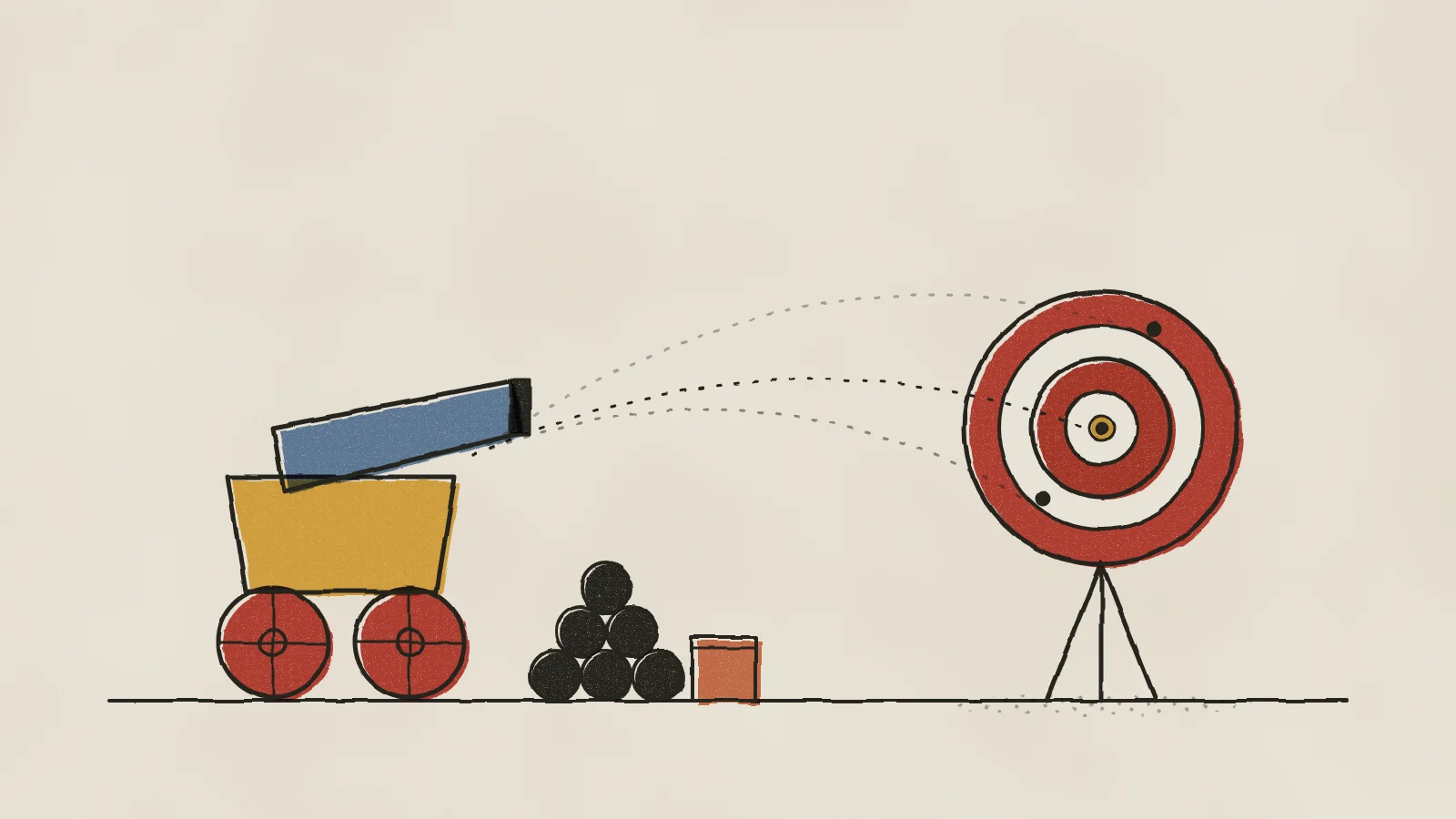
In a previous post about brands that grew too big, too fast, I mentioned an idea from Jim Collins. Fire bullets, then cannonballs. I want to go deeper on it, because if you lead anything, at some point you are going to launch something new. A new product. A new ministry. A new campus. A whole new organization.
So how do you launch something new without betting everything on it?
The story
Collins tells it in his book Great by Choice, which he wrote with Morten Hansen. Picture yourself on a ship at sea. An enemy ship is coming right at you. You only have so much gunpowder. You take all of it, fire one big cannonball, and it misses. Now you are out of gunpowder and you are in big trouble.
Now picture it a different way. You see the ship coming and you fire a bullet. It misses. You adjust and fire another one. Still off, but closer. You adjust again, and the next one is closer still. One more adjustment, and the fourth bullet hits. Now you know exactly where to aim. You take the rest of your gunpowder, fire the cannonball, and this time it hits.
Collins says a bullet is low cost, low risk, and low distraction. If it misses, you haven’t hurt the main thing. If it hits, now you have proof, and you can put real money and real people behind it. He calls that a calibrated cannonball.
Even Apple fired bullets
Apple launched the iPod in late 2001. By 2002, Collins says, it was still less than 3% of Apple’s sales. That was a bullet. Then Apple opened an online music store. Another bullet. Only after both of those worked did Apple put everything behind it.
Apple did the same thing with its stores. Before the first Apple Store opened in 2001, Steve Jobs and Ron Johnson, who ran Apple’s retail, rented a warehouse near Apple’s offices in Cupertino and built a full size store inside it. They met there every week and kept changing it.
Months into it, Johnson realized they had it wrong. The store was laid out by product, and he thought it should be laid out by what people wanted to do, like make a movie or put together their photos. Jobs wasn’t happy about it, but he agreed, and they started over. Jobs later said it cost them six to nine months. That warehouse was Apple’s test kitchen, and today Apple has more than 500 stores around the world.


Amgen, the biotech company, tried its new technology on about a dozen possible uses before it found the one that worked, a drug for anemia. Then it fired the cannonball.
Collins and Hansen found that the best companies in their study weren’t always more innovative than the companies they were compared to. What they did better was test ideas small and then bet big on the ones that worked.
Two ways to get this wrong
The first is the uncalibrated cannonball. You have a big idea, you are excited about it, and you bet everything before you know if it works. A church builds a big building for a ministry that hasn’t grown yet. A nonprofit launches in ten cities before it has worked in one. A business signs a huge lease before it has its first customer. A nonprofit puts all its funding into risky new projects and hopes they will bring in income.
The second is never firing the cannonball at all. You just keep testing and testing and never commit. Collins is clear that the best companies were not timid. Once they had proof, they made big bets. Eventually you have to just try it out and see if there are any legs on it.
Don’t get too big too fast
When something starts working, there is a big temptation to grow it as fast as you can. People are excited, a few customers love it, and you start picturing ten locations. Fight that temptation. Be patient and start small.
Before you scale, make sure two things are true. The first is that the foundation is there. You have the right people and the right systems, you have the money, and you can deliver the same quality every time without everyone working around the clock. The second is that the demand is there. People are paying for it and coming back on their own. A lot of people will tell you they love your idea. Watch what they buy.
Rich Melman, who started Lettuce Entertain You in Chicago, almost didn’t make it past his first restaurant. He opened R.J. Grunts in Lincoln Park in 1971, and he said, “When R.J. Grunts opened, business was very slow for the first few months.” They were running out of money, and he thought they might have to close. He said those early struggles taught him “never to take success for granted.” Today the company has more than 100 restaurants.
Once the foundation is set and you know the demand is real, you can grow a lot faster than you think. Apple spent a long time on one prototype store. After it worked, they opened hundreds.
What a bullet looks like
A bullet doesn’t have to be complicated. Here are a few examples.
- Want to start a new service at your church? Try it once a month for a season before you make it every week.
- Thinking about a new program? Run it with one group or in one city first.
- Have an idea for a new product? Sell it to ten people before you make a thousand.
- Need a new role on your team? Try a contractor or a part time person before you make a full time hire.
- Want to start a new organization? Start it as a project inside something that already exists, and see if it grows.
Run a test kitchen
Think of it as a test kitchen. When a restaurant wants to launch a new dish, the chefs work on it in a test kitchen first. They are thinking through the process and what the customer actually wants to buy.
Lettuce Entertain You has had a test kitchen for years, and Rich Melman still works in it with the chefs on new concepts and new menus. He said, “In our test kitchen, I’m always tasting and trying out different things together.” A new concept usually starts with the food. Then they give familiar dishes a new twist that fits the idea, and their own architects and designers work on how the room should look and feel. Melman said he is always looking for new ideas “to see how people will respond.”
Here is some of what goes on in a test kitchen.
- You make a lot of versions. The chefs make the same dish over and over, changing one thing at a time until it is right.
- Real people taste it. The chef’s opinion matters, but the customer’s matters more. Pay attention to what people order a second time.
- You find out if it can be made the same way every time. A dish only the head chef can make isn’t ready. It has to work on a busy Friday night with a cook who started last week.
- Most ideas don’t make it. It is a lot cheaper to throw out a recipe in the test kitchen than after you have printed new menus and trained the whole staff.
- You try it in one place first. That might be one restaurant, one city, or one group of customers. Then you watch the numbers.
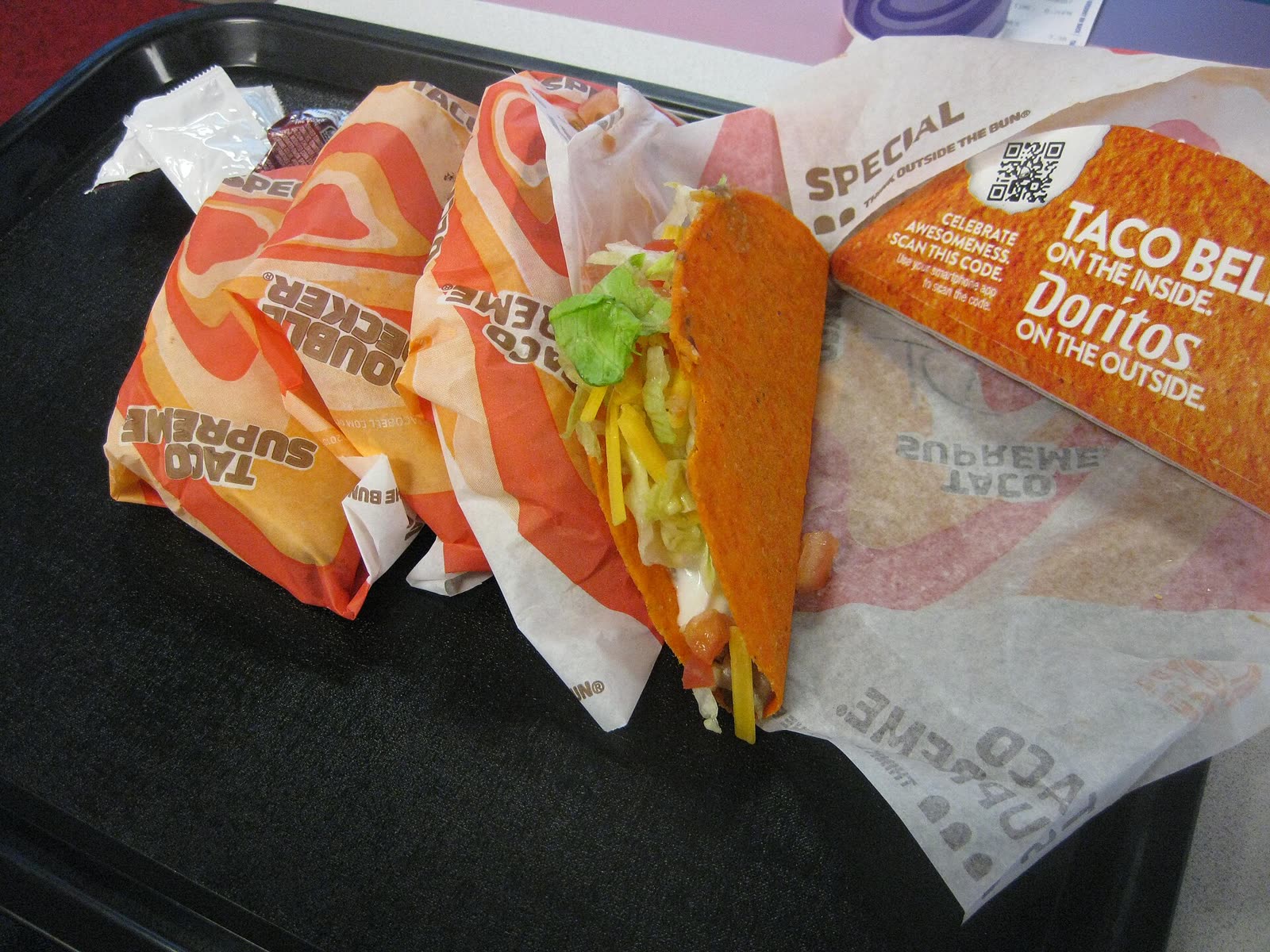
Taco Bell is a good example of a product that came out of this kind of process. In 2012 it launched the Doritos Locos Taco, a taco with a shell made out of Nacho Cheese Doritos. It sounds simple, but Taco Bell and Frito Lay worked on it for a few years and went through dozens of versions of the recipe. Making a shell that tasted like a Dorito and could be made the same way in thousands of restaurants was harder than it sounds.
Before it went everywhere, Taco Bell tested it for about a year in three cities: Fresno and Bakersfield in California, and Toledo, Ohio. Once they knew people wanted it, they fired the cannonball. They sold more than 100 million of them in the first ten weeks.

What would a test kitchen look like for you? Could you try your idea with ten people before you take it to a thousand?
Before you fire any bullet, sit down with your team and answer these together. Write the answers down.
- What are we trying to learn?
- How much money and time are we willing to spend on this test?
- What does a hit look like? Put a number on it if you can.
- By when?
- If it misses, do we adjust and fire again, or do we stop because it’s costing too much money? Admitting defeat is just as important as seeing a win. Maybe it’s not never, but not yet.
- Will this pull us away from the main thing?
Don’t skip number five. It is a lot easier to decide when you will stop before you start than after you have poured your heart into something.
The woman in Proverbs 31
Most people read Proverbs 31 as a picture of a wife and mother. Read it closely and you will see she is also running a business, and she runs it the way we have been talking about.
She starts with what she has. “She seeks wool and flax, and works with willing hands” (Proverbs 31:13).
She thinks it through before she buys. “She considers a field and buys it; with the fruit of her hands she plants a vineyard” (Proverbs 31:16). She pays for the vineyard with money she has already earned. She doesn’t bet the whole household on it. A new vineyard also takes a few years before it produces much of anything, so she has to be patient.
She knows the demand is there. “She perceives that her merchandise is profitable” (Proverbs 31:18). She isn’t guessing.
Then she grows. “She makes linen garments and sells them; she delivers sashes to the merchant” (Proverbs 31:24). She started out making clothes for her own household, and now she is selling to merchants.
She is creative, and she is careful. And the chapter tells us where all of it comes from: “a woman who fears the Lord is to be praised” (Proverbs 31:30).
Count the cost
Jesus said it this way in Luke 14:28. “For which of you, desiring to build a tower, does not first sit down and count the cost, whether he has enough to complete it?” He was talking about the cost of following Him. But the principle holds for anything we build.
Firing bullets is not a lack of faith. It is being a good manager of what God has entrusted to you: the money, the people, and the time. Test small. Learn fast. And when you know where to aim, don’t be afraid to fire the cannonball.